Sand rises gold at dawn, silence holds at dusk.
Hand-picked by our editors — only the best 5 tours from 240 reviewed.
Verified partners for Erg Chebbi tours, free cancellation where available, and instant confirmation on every booking.
Prices from verified partners. Availability updates in real time at checkout. Free cancellation policies apply where shown.
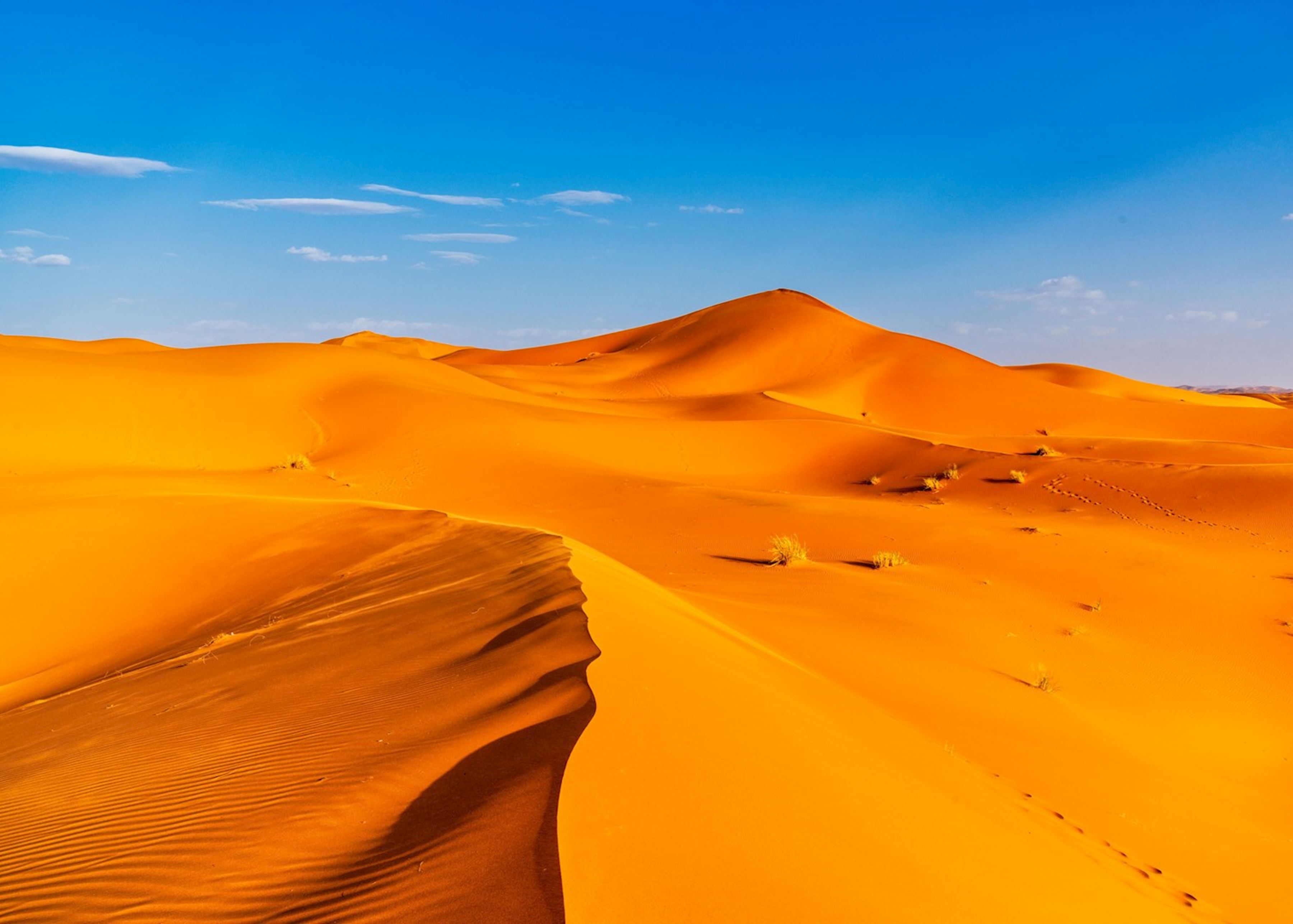
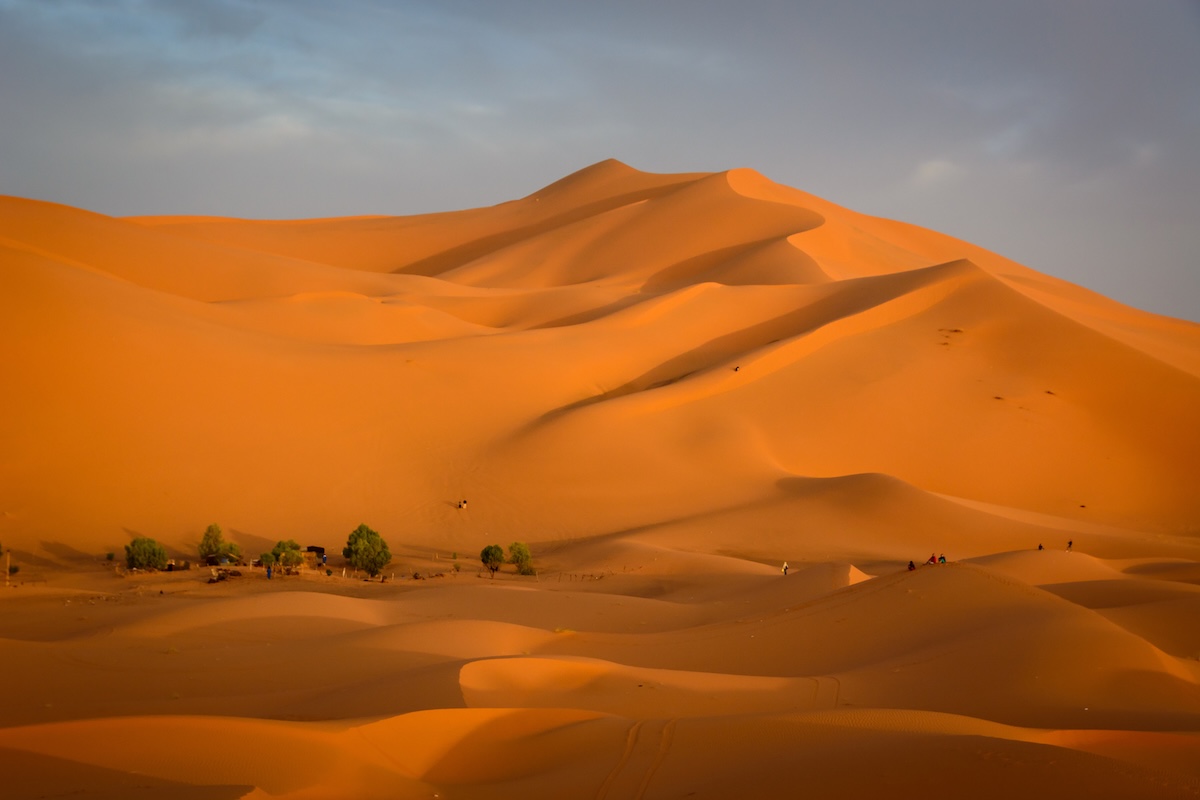
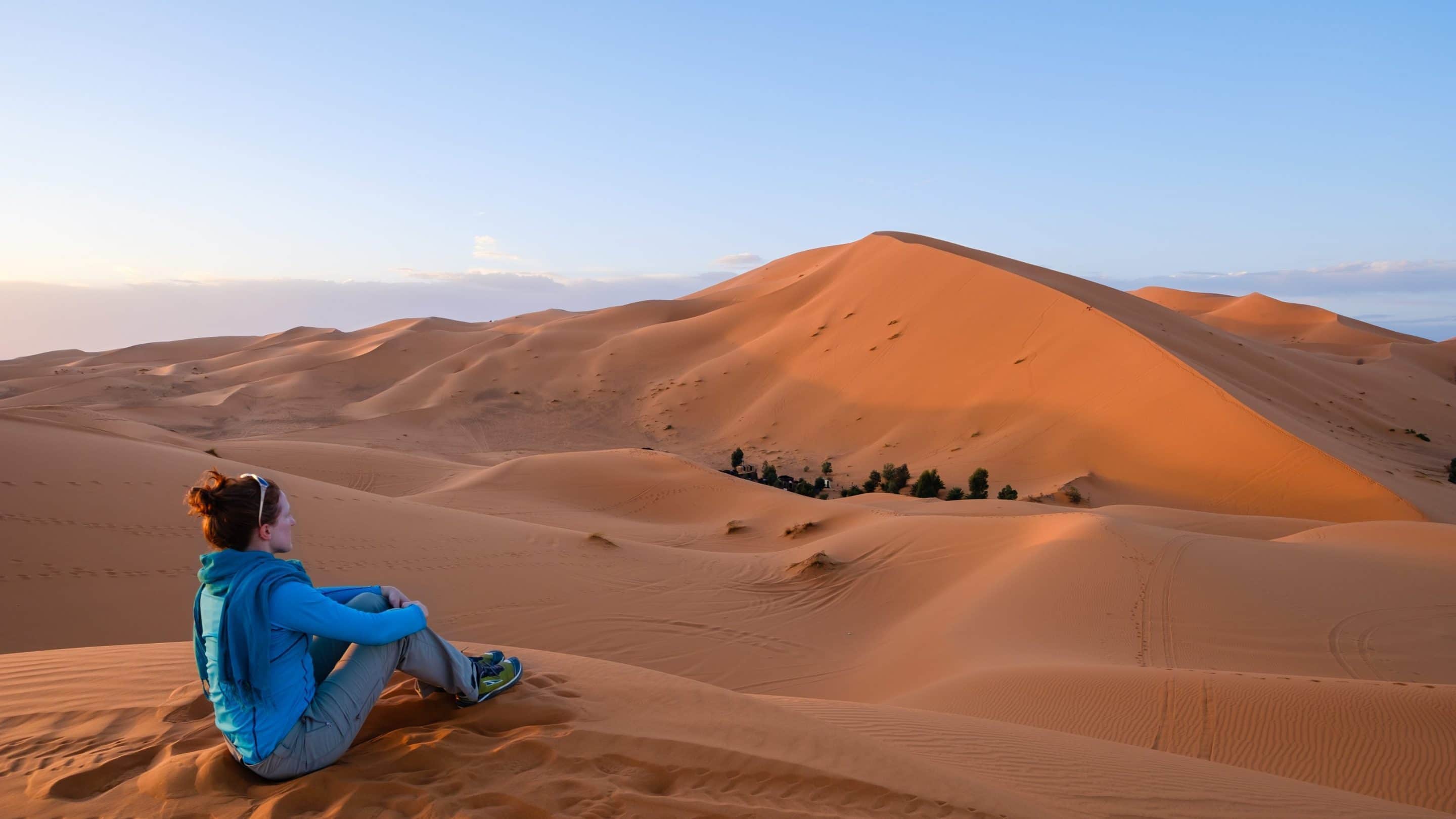
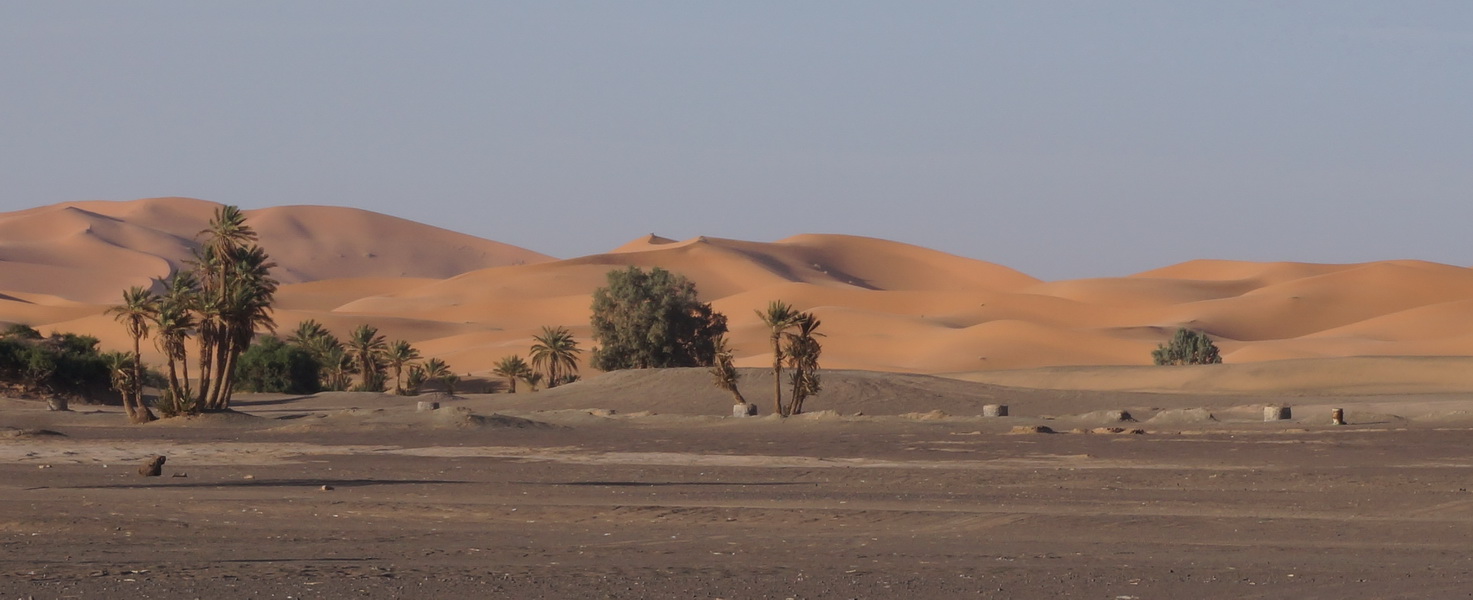
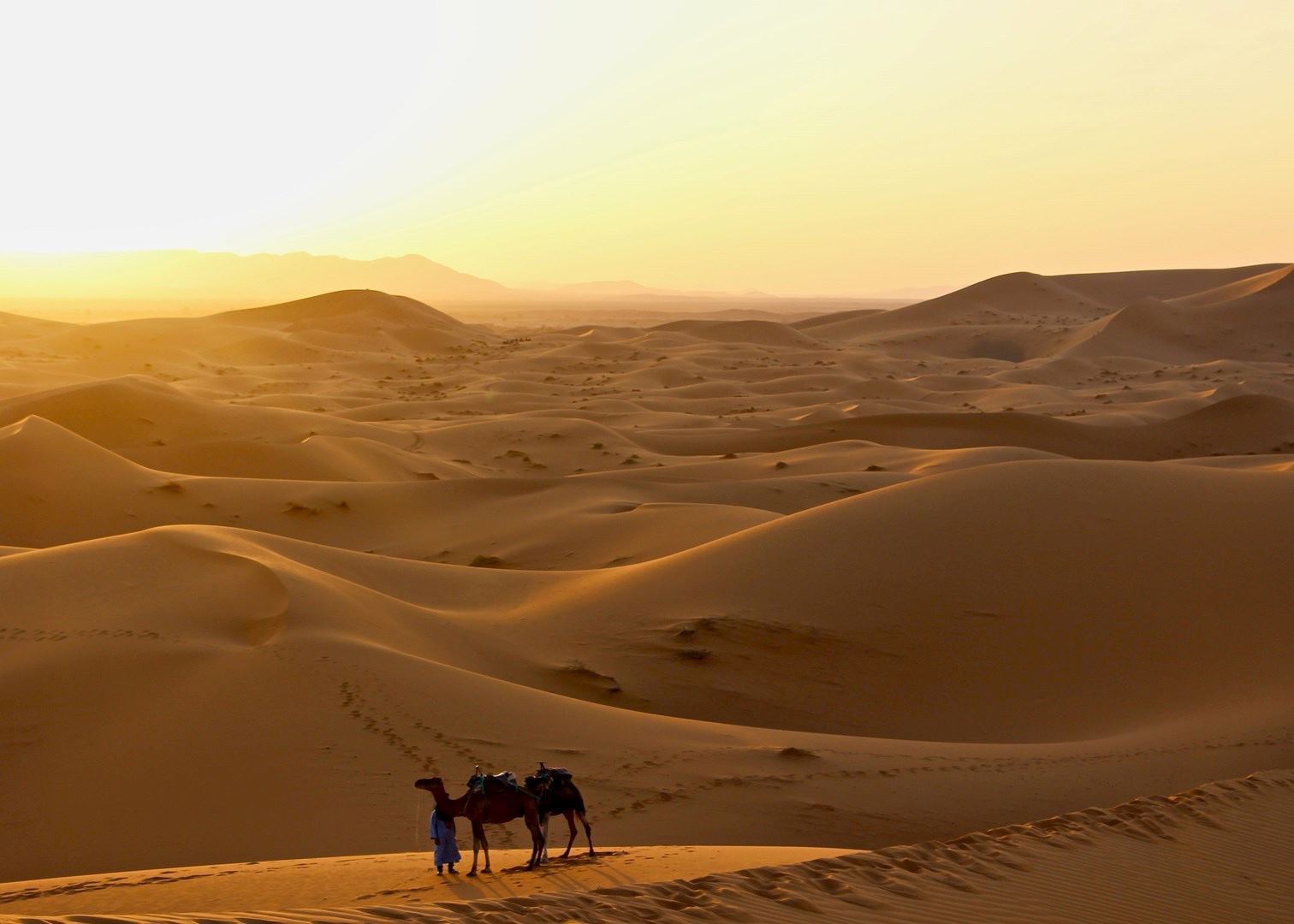
Erg Chebbi's dunes reach 150 metres, the tallest in Morocco, raised by wind from a vast ancient lakebed. The sand sits at the edge of Merzouga, where the Sahara meets the last paved road before Algeria.
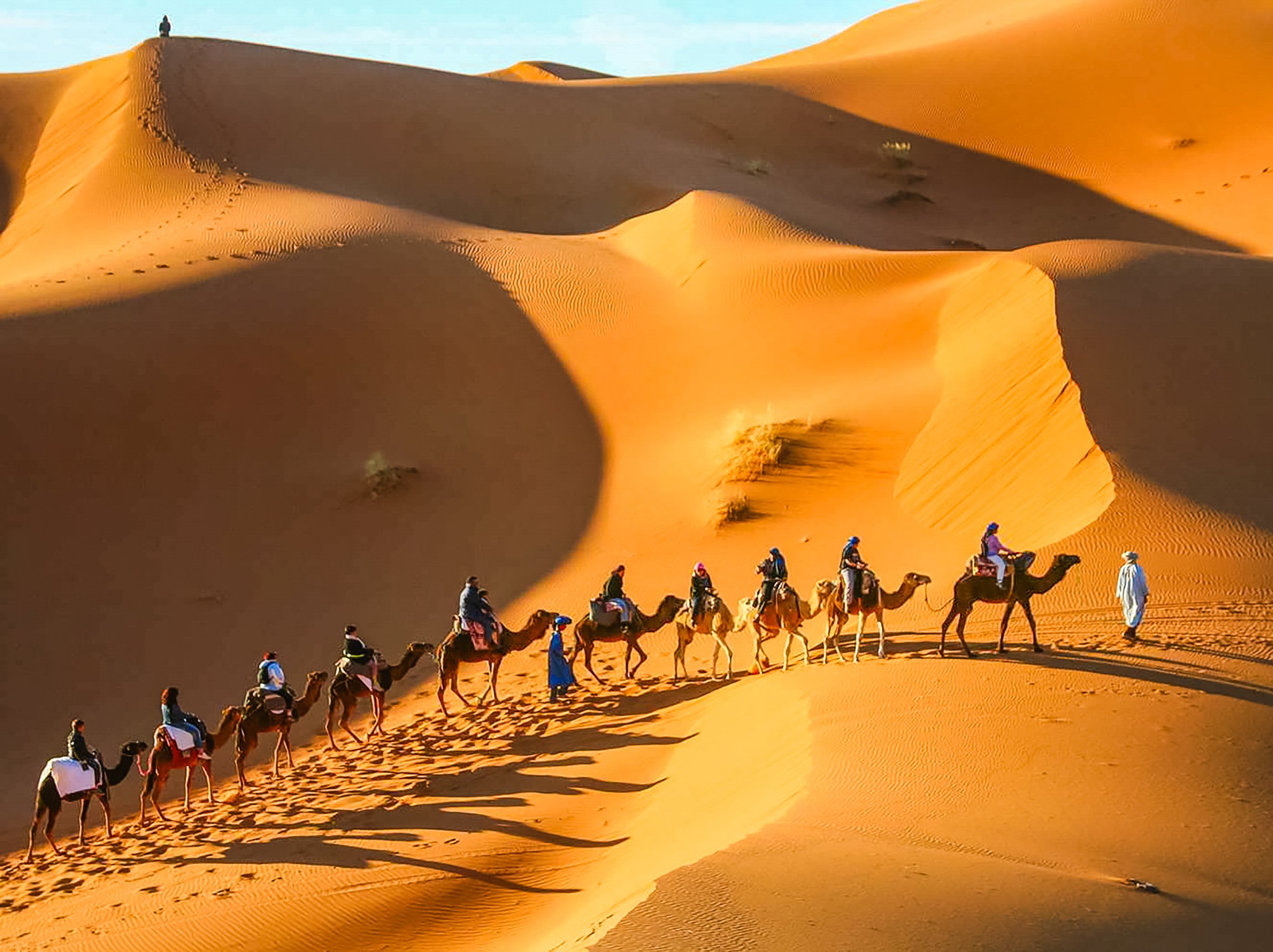
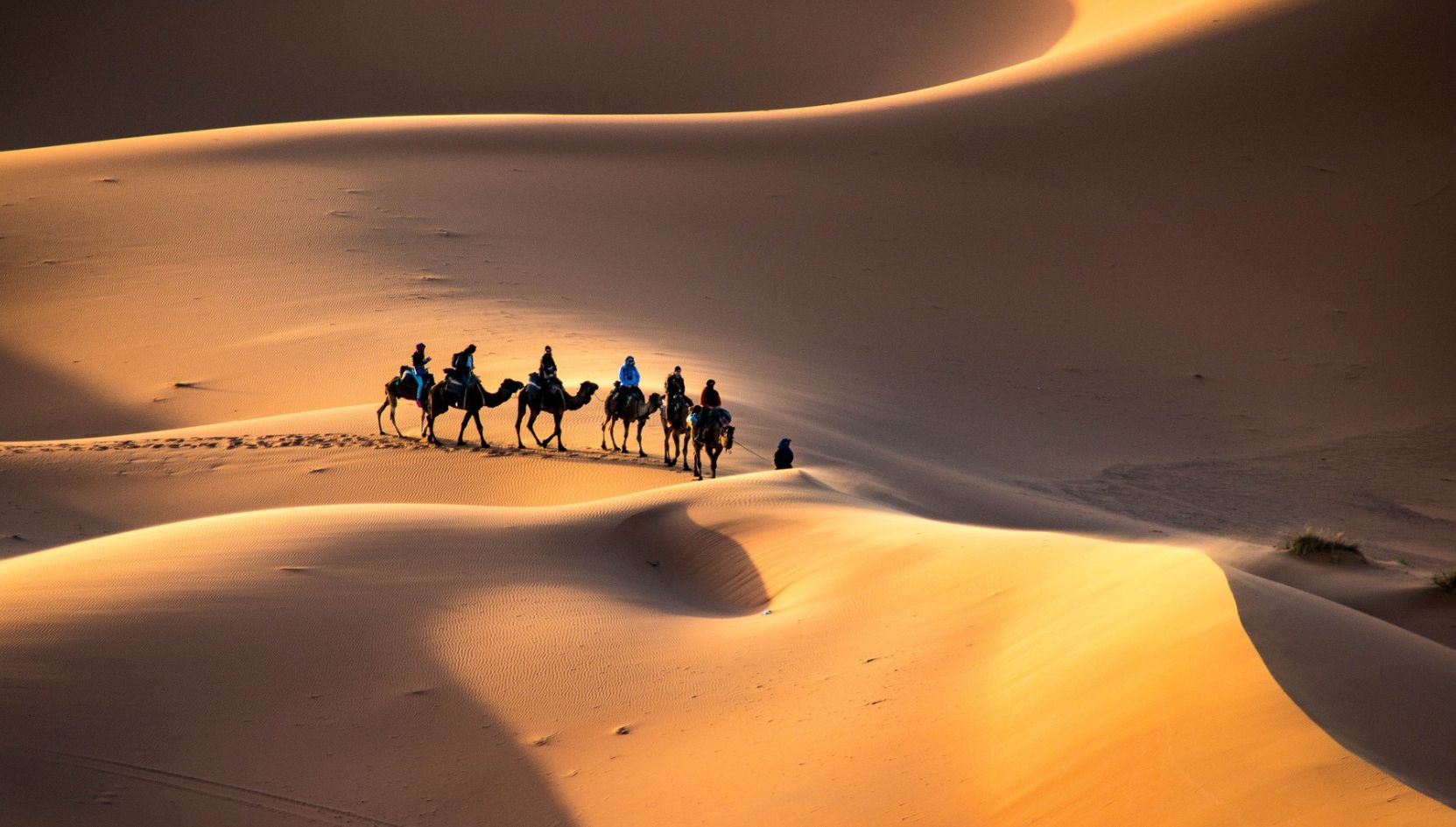
Geologists trace the erg to fine quartz carried south over millennia; Amazigh families have crossed it on foot and by caravan for centuries, trading dates and salt along Saharan routes. Today the open desert carries no gate and no fee, accessible to all who arrive at the address in Errachidia Province. Most reach it on guided erg chebbi tours, choosing between an erg chebbi camel ride at first light, a longer merzouga camel trek between bivouacs, or an erg chebbi overnight camp beneath constellations rarely visible elsewhere.
"The tallest sand in Morocco was once the floor of a lake."
A step-by-step walkthrough of Erg Chebbi tickets — what you'll see, how long each stage takes, and the details that matter.
You arrive in the cool 05:30–07:30 window, when sunrise light peaks before the heat and the crowds thin. You leave the vehicle at the dune base in Merzouga, where there is no ticket booth and no entry charge.
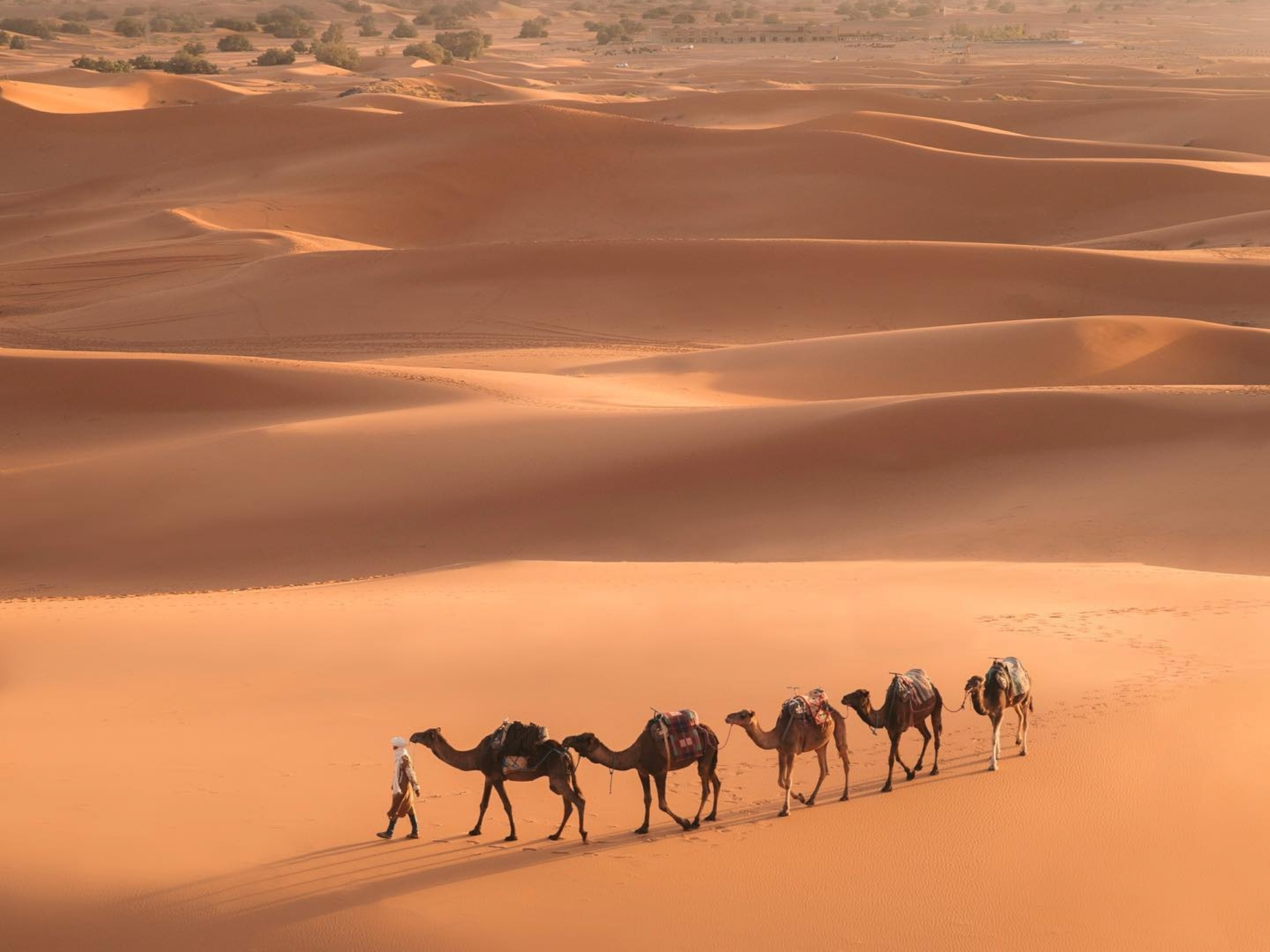
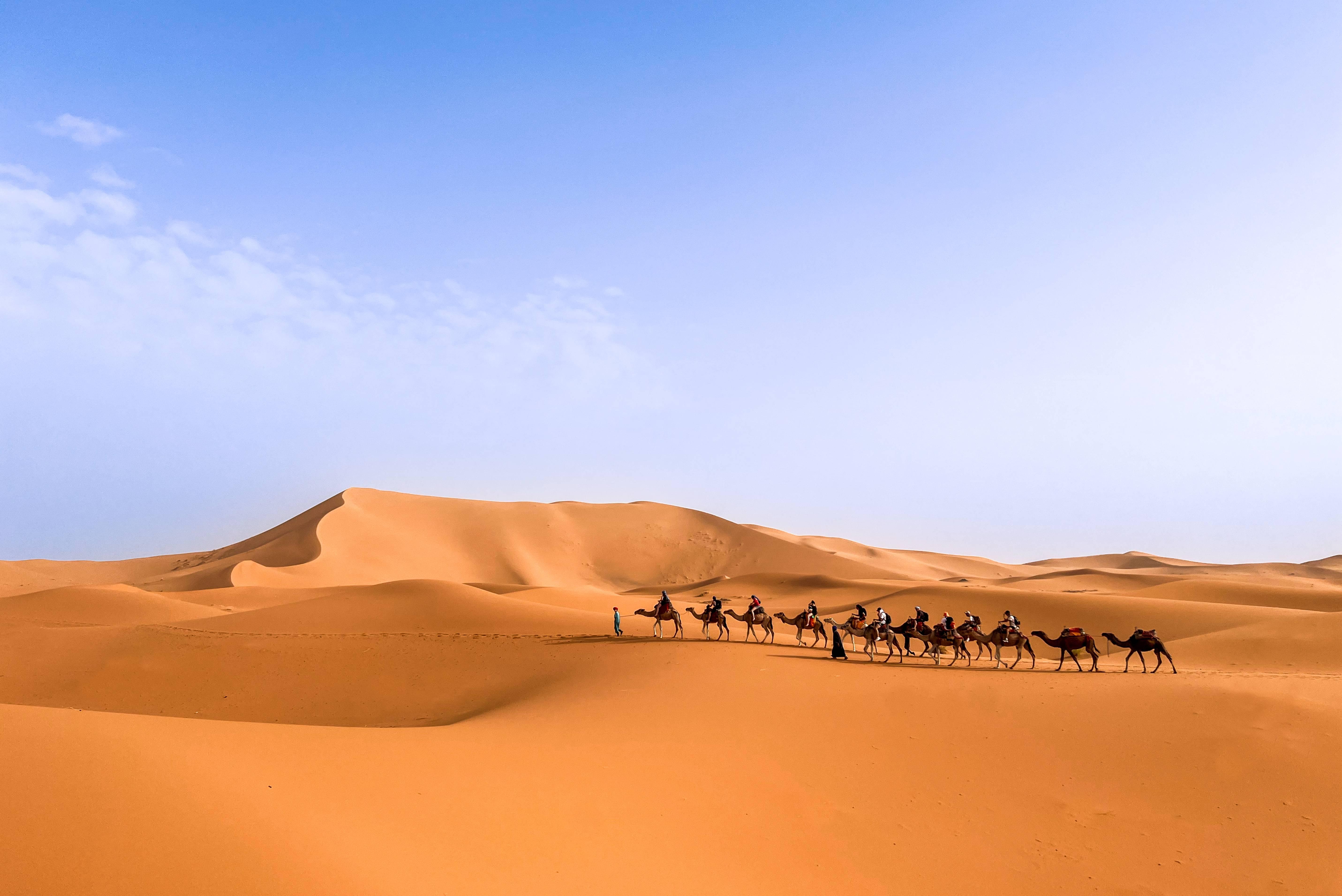
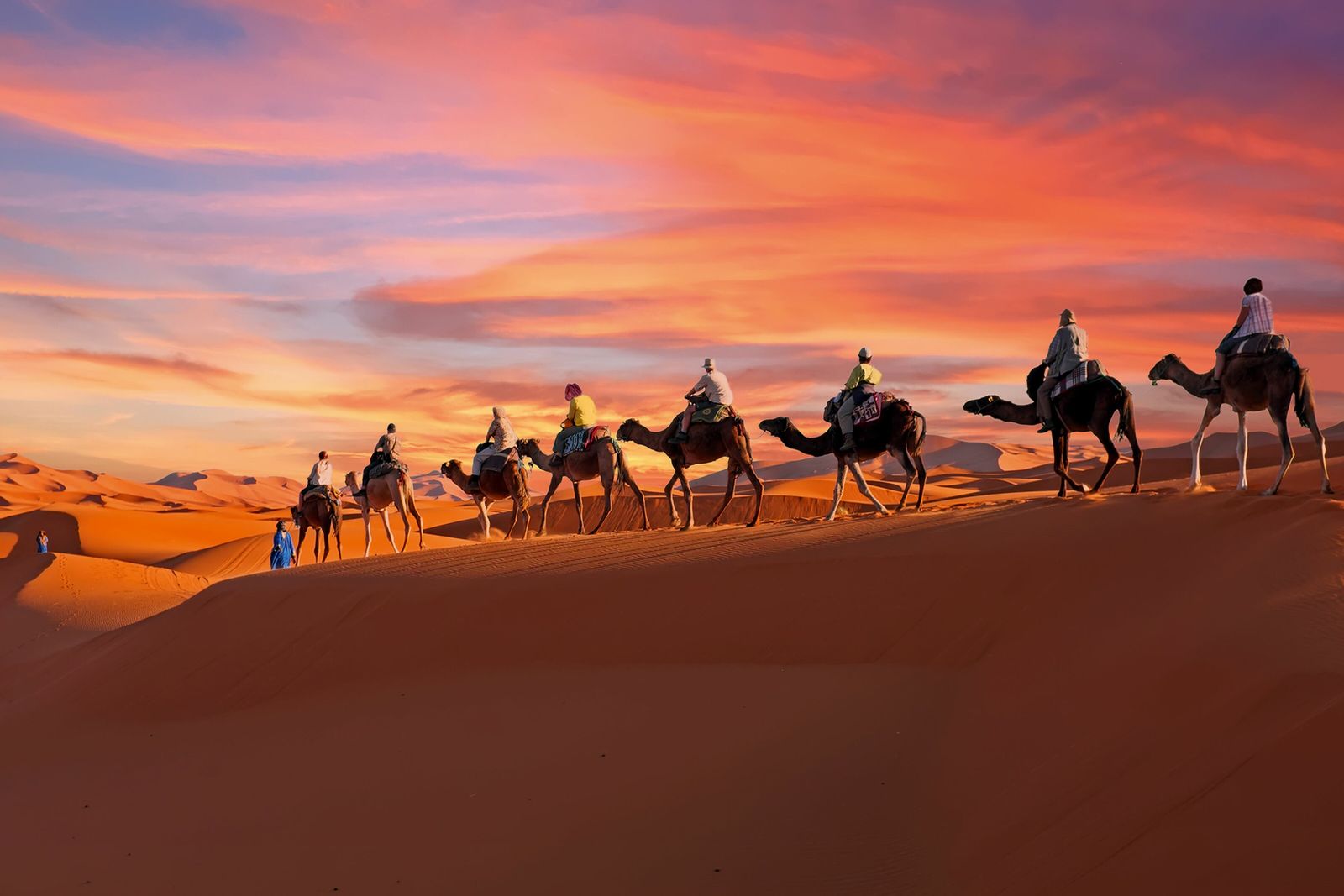
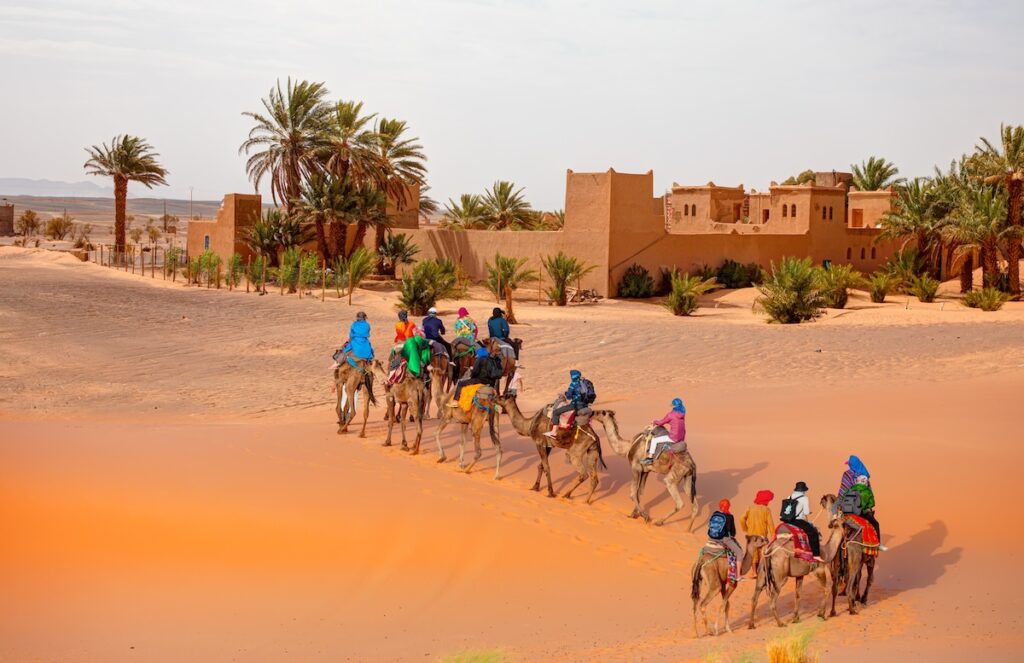
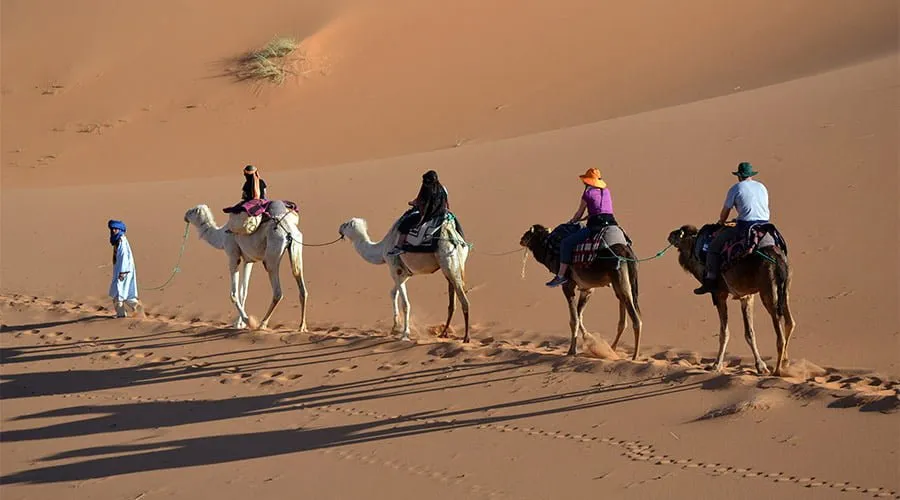
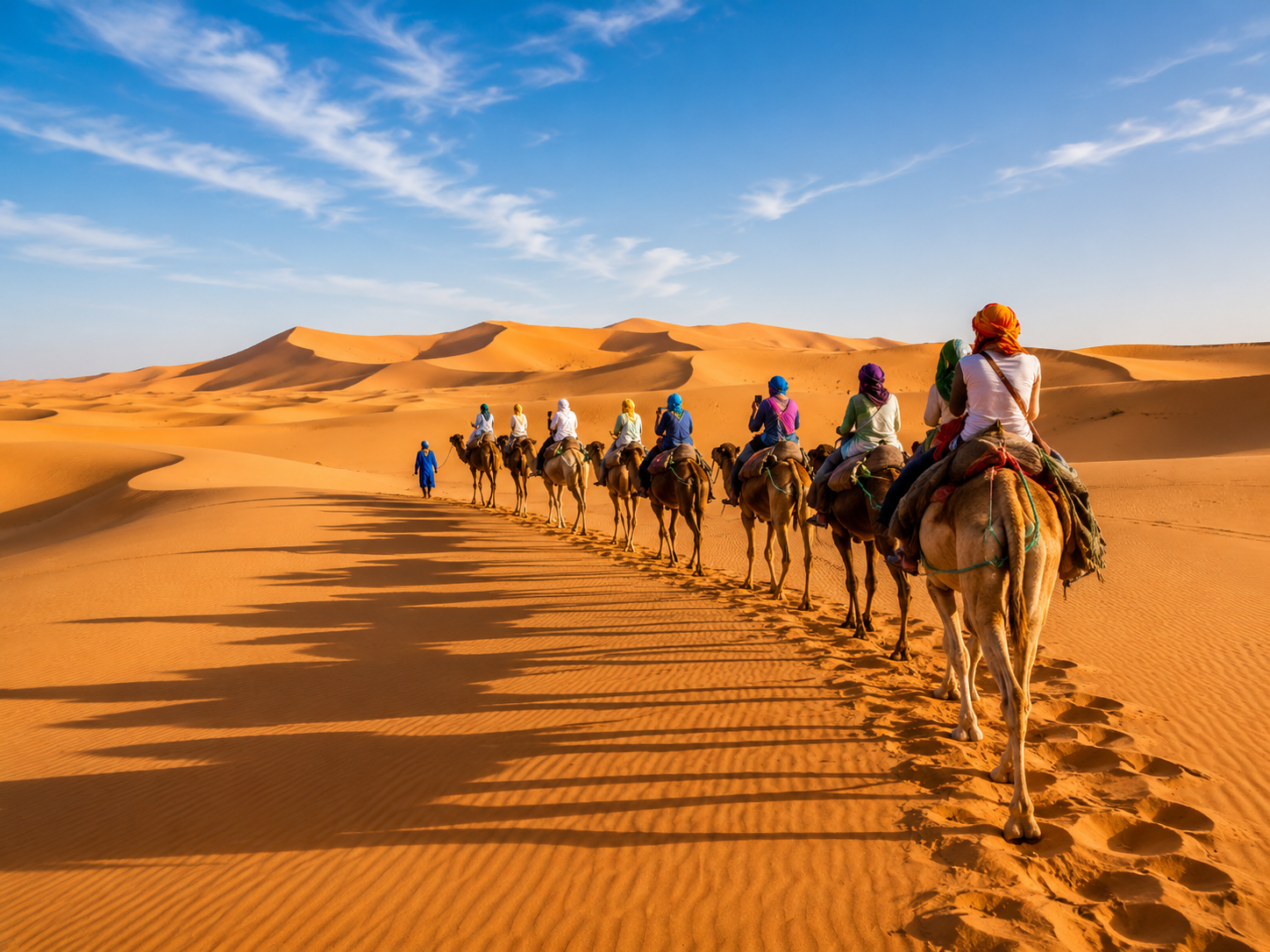
A guide settles you onto a camel, and the camel ride across the erg chebbi dunes climbs ridgelines for roughly 90 minutes.
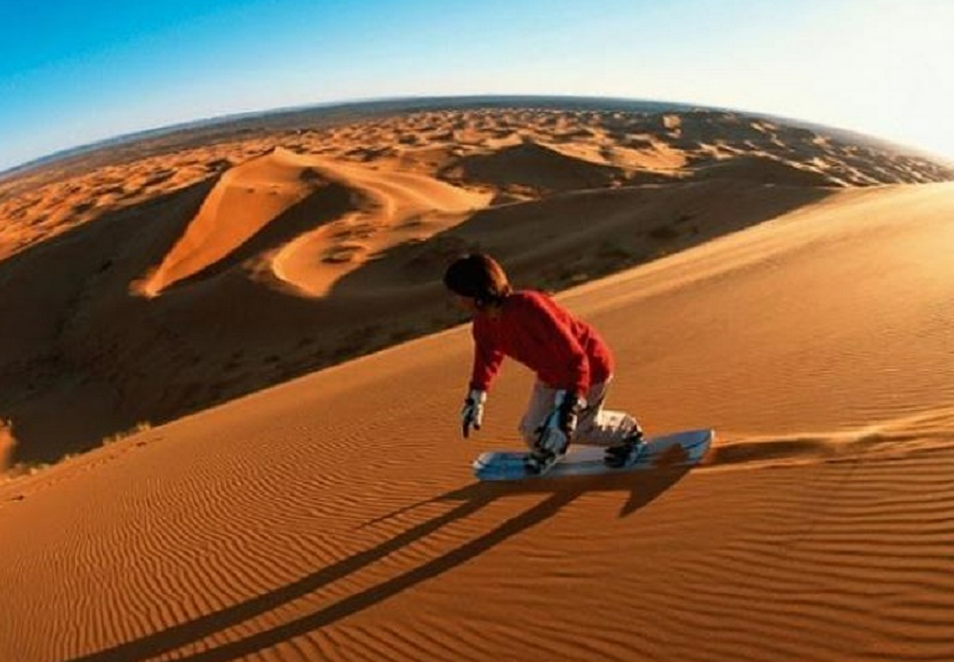
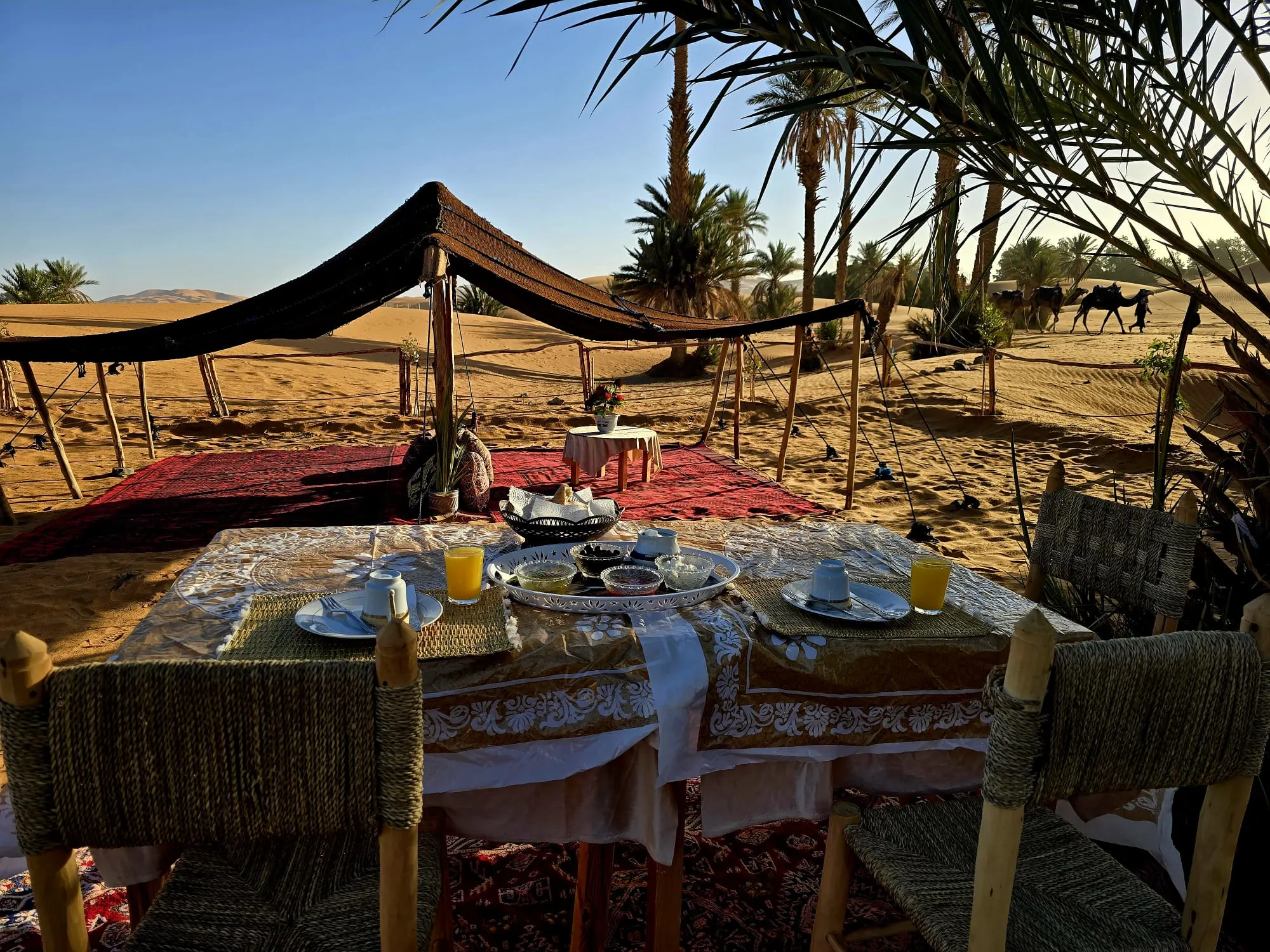
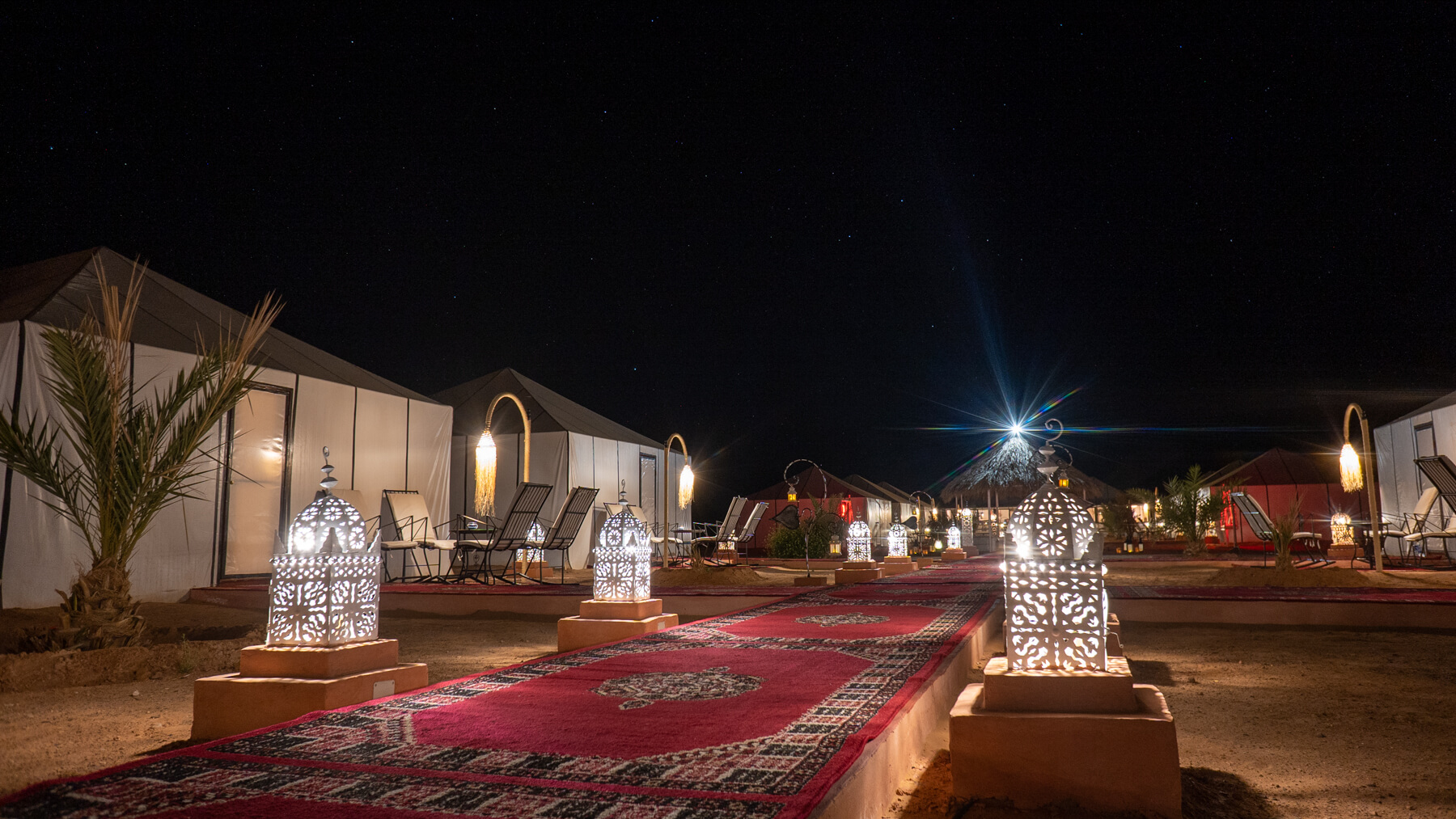
You pause at a crest, watching the sand shift from rose to amber. By late afternoon you trek toward a heated tent camp, sandboard down a steep face, then eat tagine as the temperature drops. You lie back on the cooling sand of erg chebbi and count satellites crossing a sky free of light.
The landmarks, rooms, and views travelers on Erg Chebbi tours remember — all visible on a single visit.
At approximately 150 metres, this is the highest dune in the erg chebbi field; on clear days the view extends across the Algerian border plain, and the climb takes 30–45 minutes on foot up the windward face.
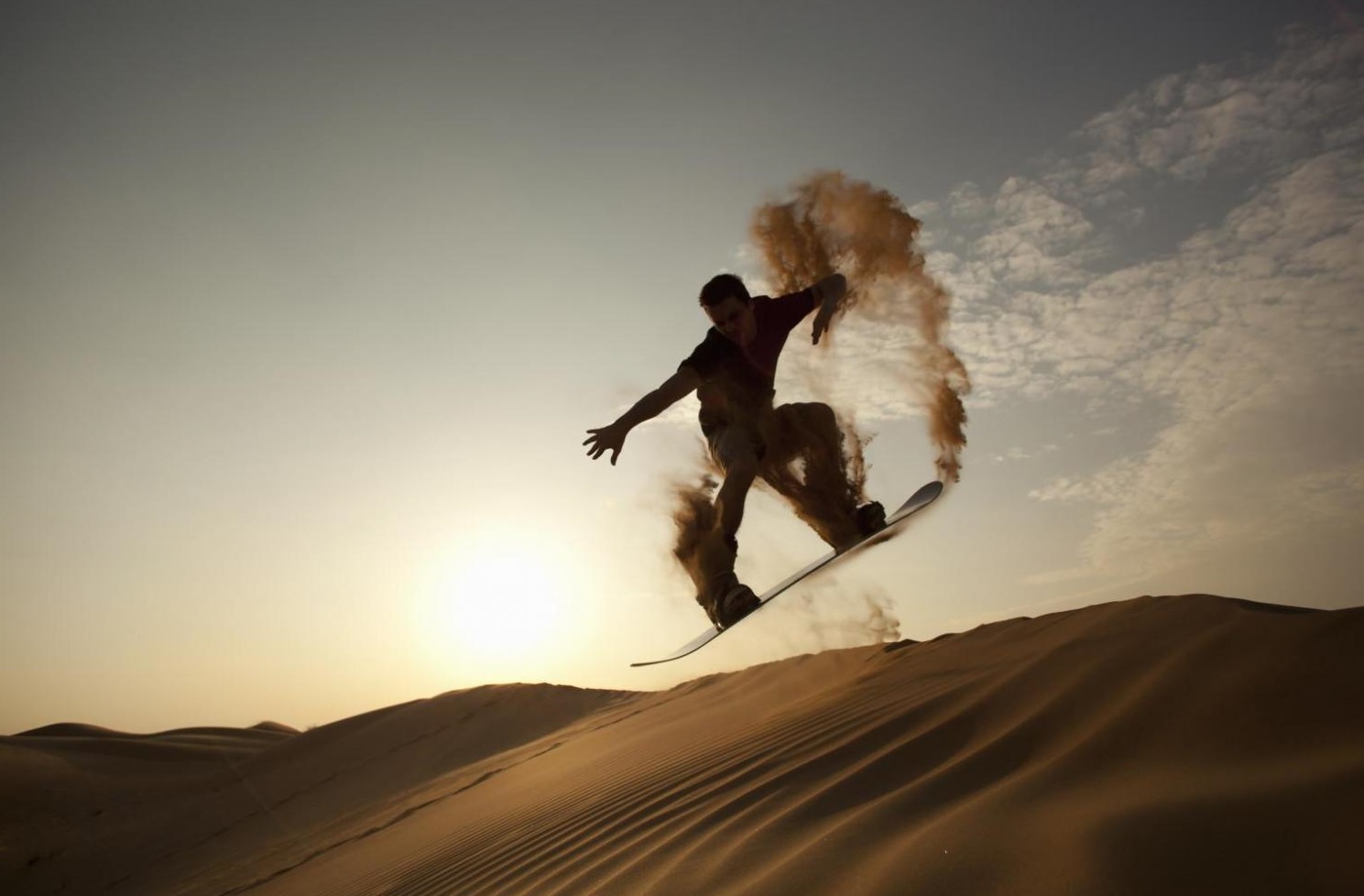
The steep leeward faces of erg chebbi's central dune belt average 30–34 degrees — the same gradient as a ski black run — and are the primary sandboarding zones used by local operators.
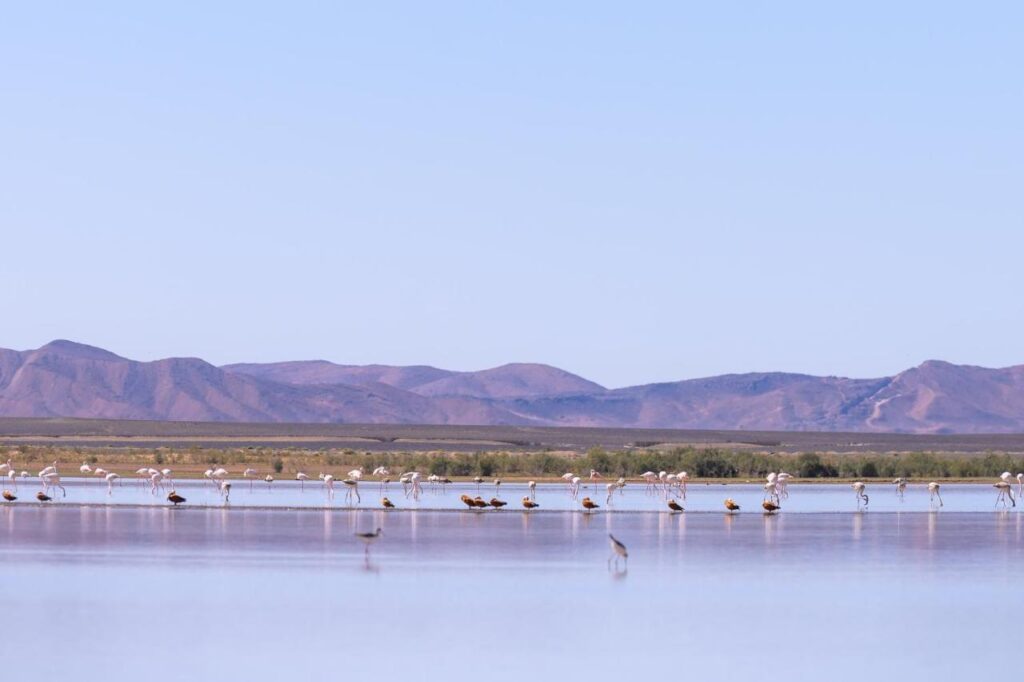
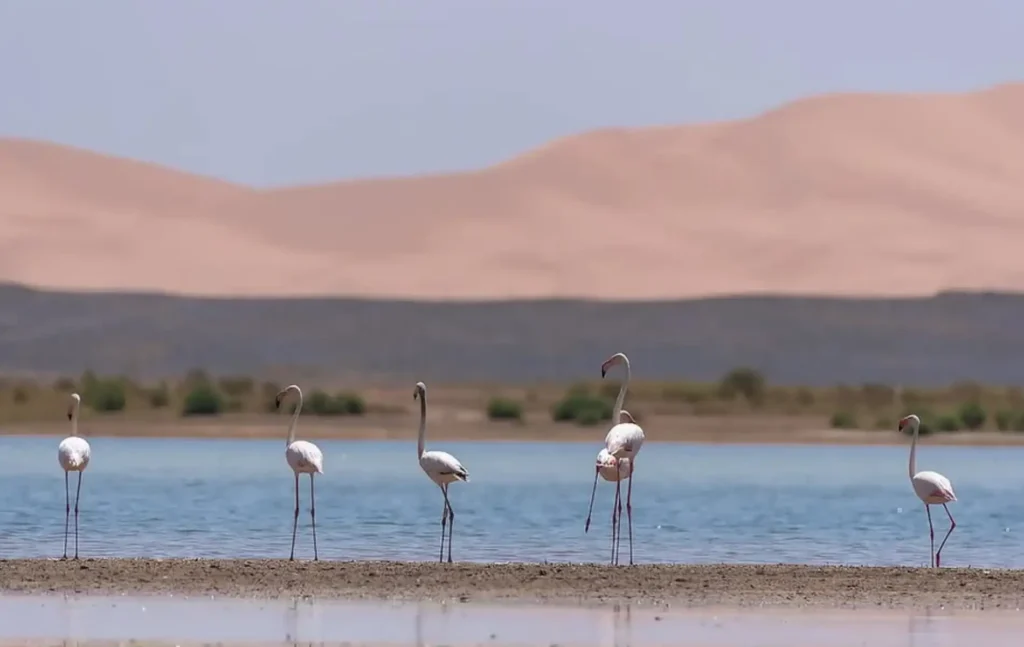
A seasonal salt lake lying roughly 3 km from the dune base that can host hundreds of greater flamingos when winter rainfall fills it; the lake is typically dry from June through September.
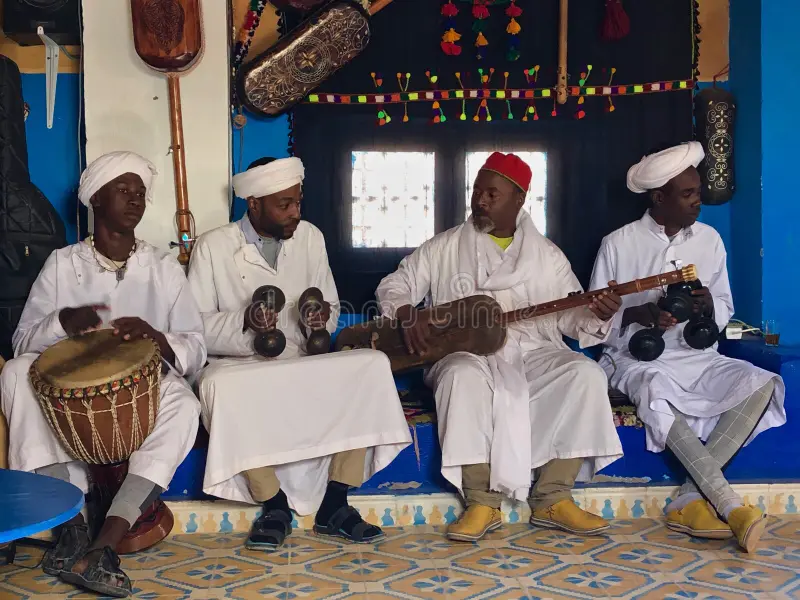
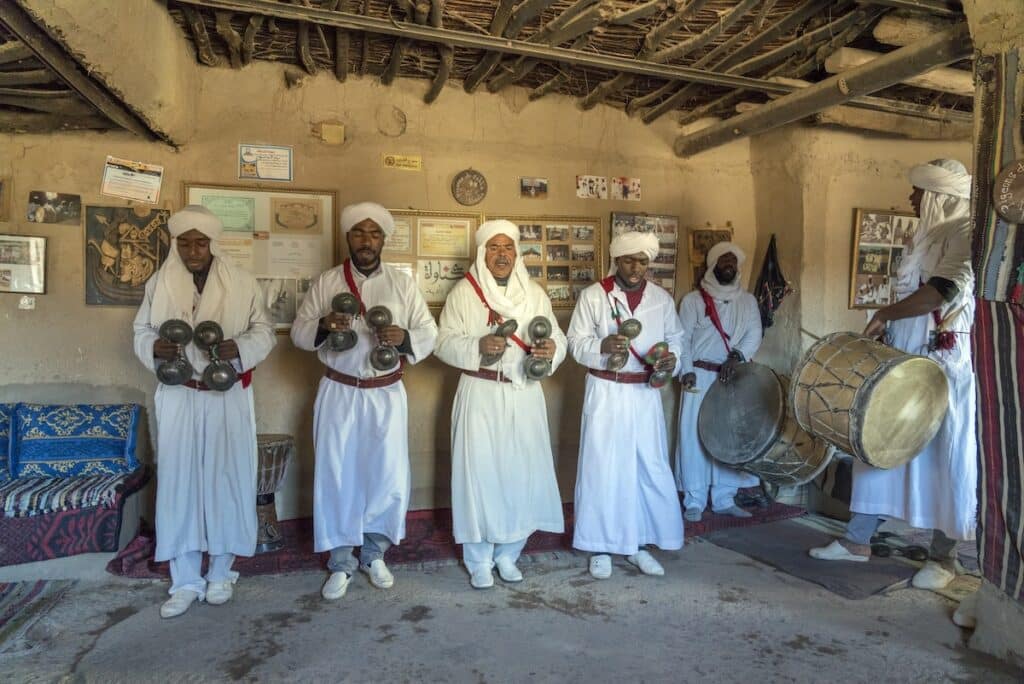
Located 7 km south of Merzouga at the edge of the dune field, Khamlia is home to two Gnawa performance groups — Bambara and Pigeon des Sables — who play the guembri bass lute in ceremonies rooted in sub-Saharan spiritual traditions.
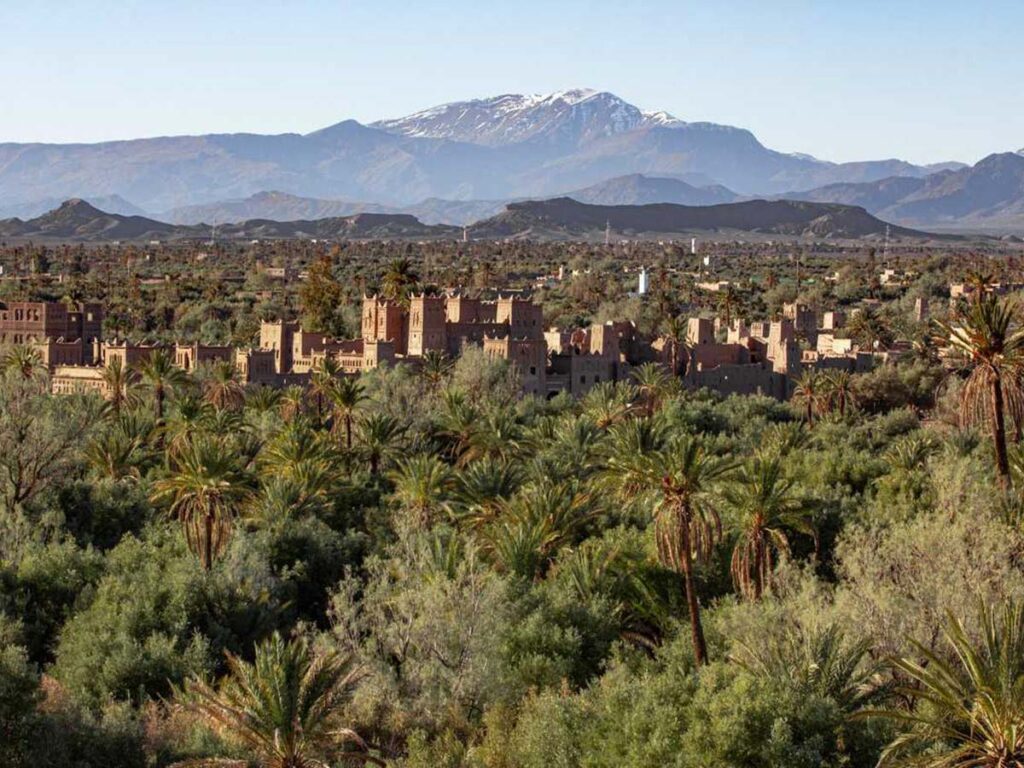
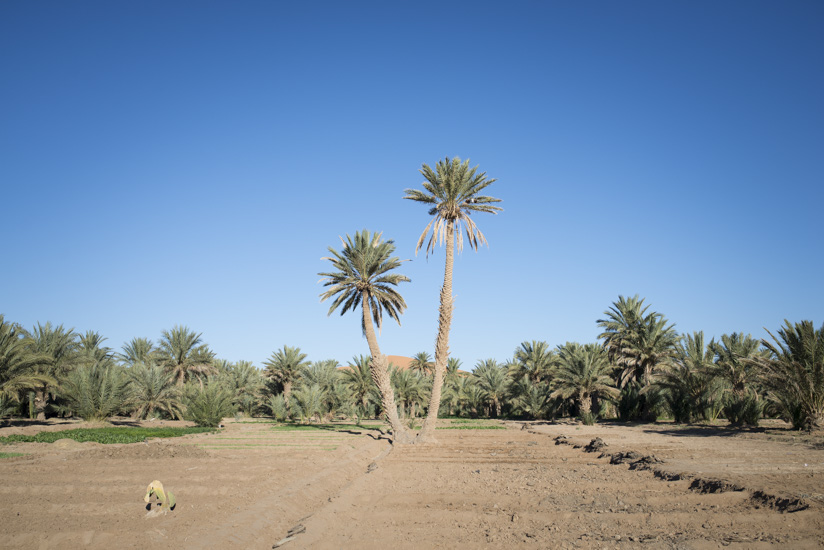
This palm-grove oasis on the northern edge of erg chebbi is irrigated by an ancient underground khettara canal system; the shaded gardens offer a vivid contrast to the surrounding sand sea and remain one of the few year-round water sources in the area.
Every Erg Chebbi tour side-by-side — duration, what's included, how you redeem.
| Experience | From | Duration | Transfers | Pickup | Lunch | Tax inc. | Free cancel. | Price | |
|---|---|---|---|---|---|---|---|---|---|
|
Skip-the-line Most popular
|
— | — | — | — | — | — | ✓ | €235 | Book → |
|
Standard Entry
|
— | — | — | — | — | — | — | €150 | Book → |
|
Guided Experience
|
— | 2 hr | — | — | — | — | — | €435 | Book → |
All prices from verified partners. Availability and exact terms confirmed at checkout.
Choose your ticket, select your date, and reserve in under two minutes. Secure checkout handled by our verified partner.
Instant confirmation by email, with a mobile voucher you can save offline. No printing, no queuing at a collection desk.
Arrive at the entrance, show your voucher on your phone, and walk in. Most tickets include priority or skip-the-line access.
Practical details for Erg Chebbi tickets straight from our verified partners — hours, access, rules, and how to get there.
Merzouga, Errachidia Province, Morocco
Most tour operators and camel handlers gather here; shared grand taxis from Rissani drop off here.
Open in Google MapsSupratours runs a daily direct bus from Marrakech departing ~08:00, arriving Merzouga ~20:00; CTM runs an overnight bus from Fes (departs ~20:30, arrives Rissani ~07:30) with a 30-minute grand taxi onward to Merzouga.
Drive the N9 from Marrakech via Ouarzazate and the Draa Valley, or the N13 from Fes via Er Rachidia; roads are paved to Merzouga but the final stretch to dune camps may require a 4×4.
Grand taxis run between Rissani and Merzouga throughout the day; private grand taxi from Fes or Marrakech can be negotiated.
Royal Air Maroc operates limited weekly flights from Casablanca to Moulay Ali Cherif Airport (Errachidia); Ryanair has served the route seasonally. Transfer by grand taxi from Errachidia to Merzouga takes about 2 hours.
Lightweight, loose-fitting, breathable clothing is strongly recommended for daytime visits to erg chebbi, where temperatures can exceed 40 °C in summer. A headscarf or hat and UV-protective layers protect against intense sun exposure. For evenings and early mornings, temperatures drop sharply, so a warm fleece or jacket is essential.
There are no bag-check facilities or security checkpoints at the open desert of erg chebbi. Carry only what you need for your excursion, as sand can damage electronics and clog zippers. Backpacks with hip belts distribute weight better on soft sand and are preferable to shoulder bags.
Photography of the Saharan dune sea is unrestricted across erg chebbi's open terrain. Always ask permission before photographing local residents, Berber guides, or nomadic families, as a sign of respect. The golden hour between 05:30 and 07:30 produces the most dramatic shadow-play on the dune ridges — ideal for landscape photography.
The sandy terrain of erg chebbi's dune faces is not accessible to standard wheelchairs or mobility aids. Visitors with limited mobility can experience the dune edge from the flat hardpan areas bordering Merzouga village, roughly a 10-minute drive from most guesthouses. Some operators offer camel litters or 4×4 vehicle tours that reach elevated vantage points without requiring walking on soft sand.
Mobile signal within erg chebbi is intermittent; Maroc Telecom and Inwi provide the best coverage near Merzouga village but signal degrades quickly once deep in the dune field. Download offline maps before arrival, as navigation apps will not function reliably. Keep phones in a sealed bag or case to protect against fine sand ingress.
Erg chebbi is well suited to families; camel treks are available in gentle one-hour circuits designed for children, and sandboarding on the lower dune slopes is popular with older kids. Desert camps in the dune field typically provide family tents, shared fire circles, and evening Berber music performances. Carry extra water and sun protection for children, as dehydration and sunburn risks are higher on the reflective sand.
There are no food vendors or restaurants inside the erg chebbi dune field itself; all dining is located in Merzouga village or at desert camps within the dunes. Most overnight camps include dinner and breakfast, typically featuring Moroccan tagine, couscous, and fresh mint tea. Carry at least two litres of water per person for any excursion lasting more than two hours.
Pets are not officially prohibited in the open desert but are strongly discouraged due to extreme heat, scorpions, and sand vipers. Most desert camps and guesthouses in Merzouga do not permit pets on their premises. If you do bring a dog, keep it on a lead at all times and ensure it has constant access to shade and water.
Sandboarding boards can be rented from local operators in Merzouga for roughly 50–100 MAD per session. Stargazing is exceptional at erg chebbi due to minimal light pollution; new-moon nights offer the clearest Milky Way views. Berber guides registered with the Errachidia Province tourism office carry official identification and are recommended over unregistered touts.
Merzouga, Errachidia Province, Morocco
Most tour operators and camel handlers gather here; shared grand taxis from Rissani drop off here.
Get directions
Hassi Labied, Merzouga area, Morocco
Northern gateway to erg chebbi; several riads and camps use this as their departure point for dune excursions.
Get directionsBest time to go, insider tips, nearby landmarks, and the cancellation fine print — flip through to skim what matters to you.
How crowds, weather, and events shift across the year.
Warm days around 25–30 °C, cool nights, and fewer crowds make autumn the most comfortable season for Merzouga camel treks and desert camping at erg chebbi.
Winter brings cold nights (near 0 °C) but crystal-clear skies ideal for stargazing and photography; occasional rain can briefly fill Dayet Srji salt lake with flamingos.
Spring is the second-best window: moderate heat, blooming desert vegetation, and the Merzouga International Music Festival (usually May) draw cultural visitors.
The annual Merzouga International Music Festival celebrates Berber, Gnawa, and world music near the dunes, making this a culturally rich time to visit erg chebbi.
Summer is the off-peak season; daytime temperatures regularly exceed 40 °C, making any exploration of erg chebbi before 09:00 or after 17:00 essential.
Small details that turn a good visit into a great one.
The sunrise window of 05:30–07:30 delivers the most dramatic shadow ridges and cooler temperatures; by 09:00 in June the sand surface can reach 60 °C, making barefoot walking painful.
Registered Berber guides carry ID from the Errachidia Province tourism authority; they know safe routes, carry first-aid kits, and can navigate back to camp in sandstorm conditions.
Camps located inside the dune field (not on the edge of town) provide genuine darkness for stargazing and authentic soundscapes; ask operators exactly how far their tents are from the village road.
Night temperatures at erg chebbi can drop 20 °C below the daytime high; a fleece is essential for pre-dawn camel treks regardless of summer heat forecasts.
Fine Saharan sand infiltrates camera bodies, USB ports, and earphone jacks within minutes; use ziplock bags or a dedicated sand-proof case whenever you set equipment down on the dune face.
Standard one-hour sunset camel circuits from Merzouga are typically 150–250 MAD per person; agree the price, route, and return method in writing or by screenshot before mounting.
Non-bookable sights within a short walk — free to visit, easy to pair.
A seasonal salt lake roughly 3 km from Merzouga that fills after rain to attract flamingos, herons, and migratory ducks; usually dry in summer.
A village 7 km south of Merzouga where descendants of sub-Saharan Africans preserve Gnawa spiritual music tradition; two performance groups — Bambara and Pigeon des Sables — welcome visitors.
A palm-grove oasis on the northern edge of the dune field with a traditional canal irrigation system (khettara) still in use.
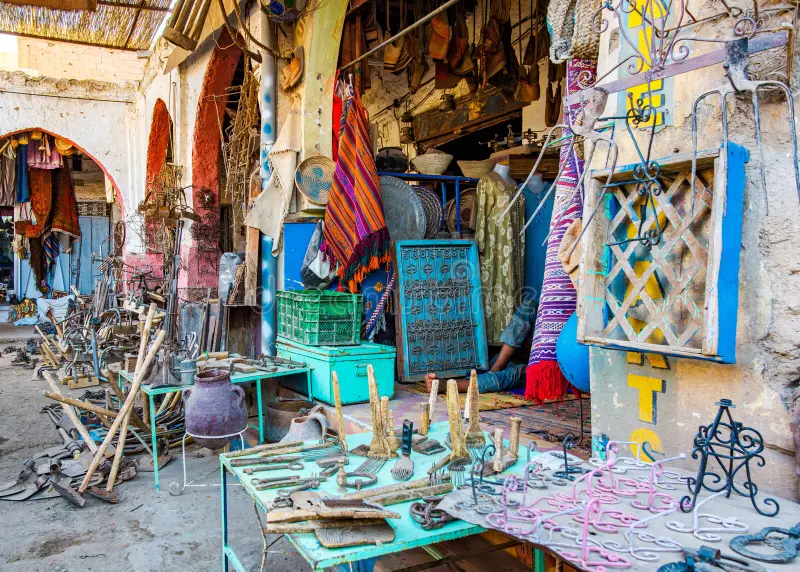
One of the largest weekly markets in southern Morocco (held Mon, Thu, Sun), trading in dates, Berber rugs, and handcrafted silverware near the ruins of Sijilmassa.
Flexible, no hidden fees.
Erg Chebbi is an open desert with no official gate or entrance fee (0 MAD), so no ticket cancellation applies to the dunes themselves. For third-party guided tours or camp bookings, cancellation terms vary by operator; most reputable camps require 48-hour notice for a full refund.
Hand-picked options within walking distance — pick a district for vibe, or a specific hotel for convenience.
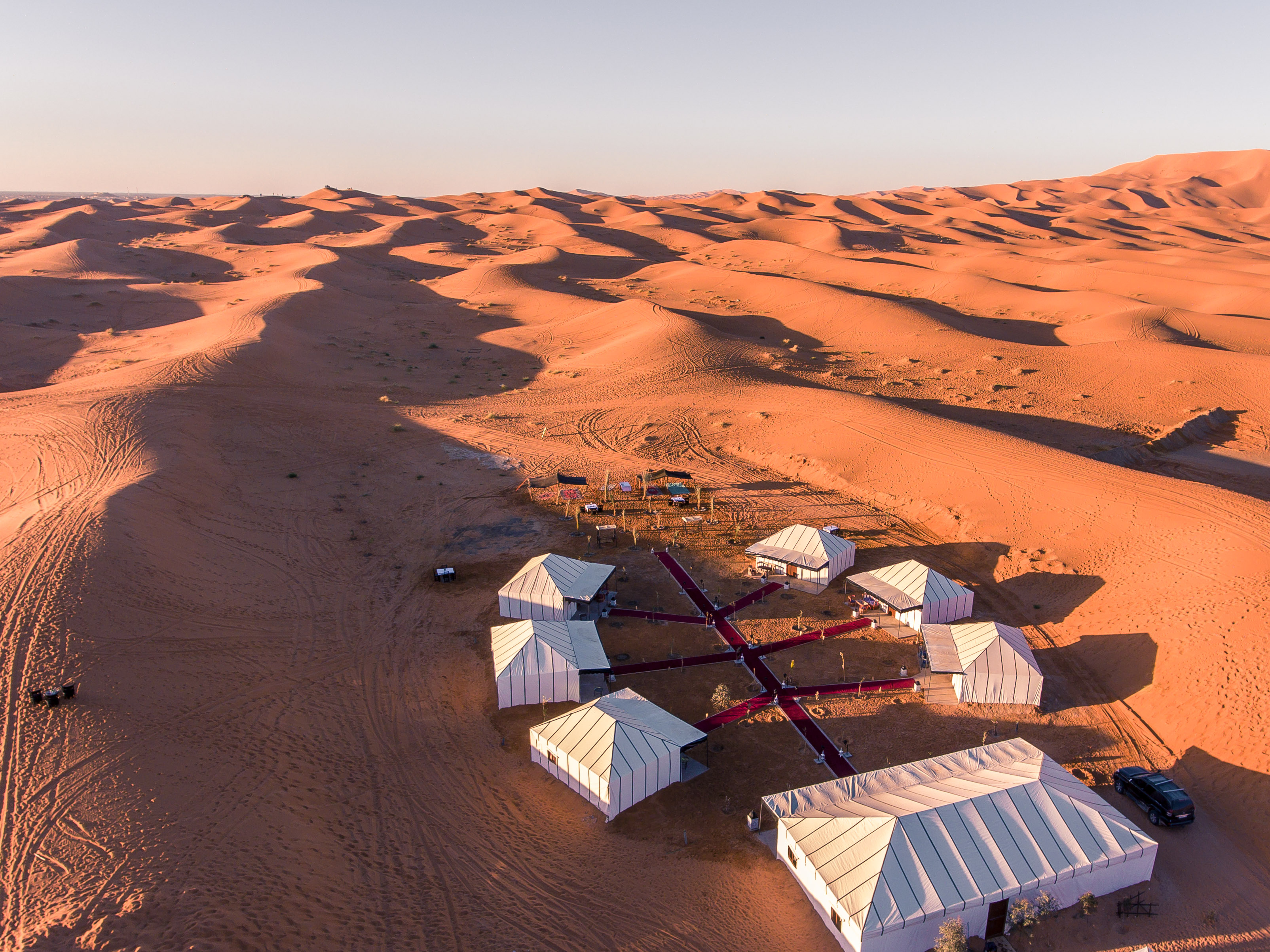
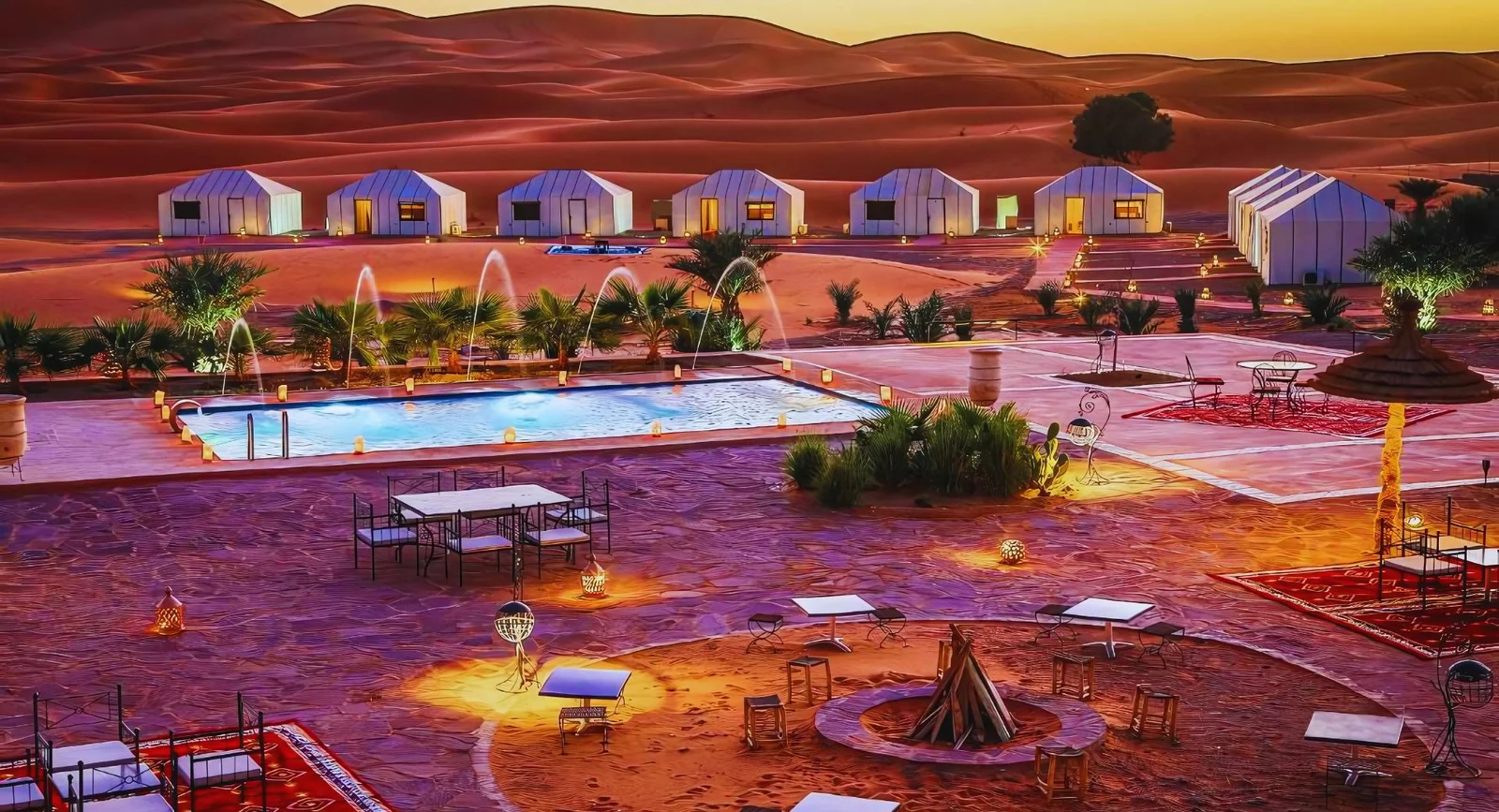
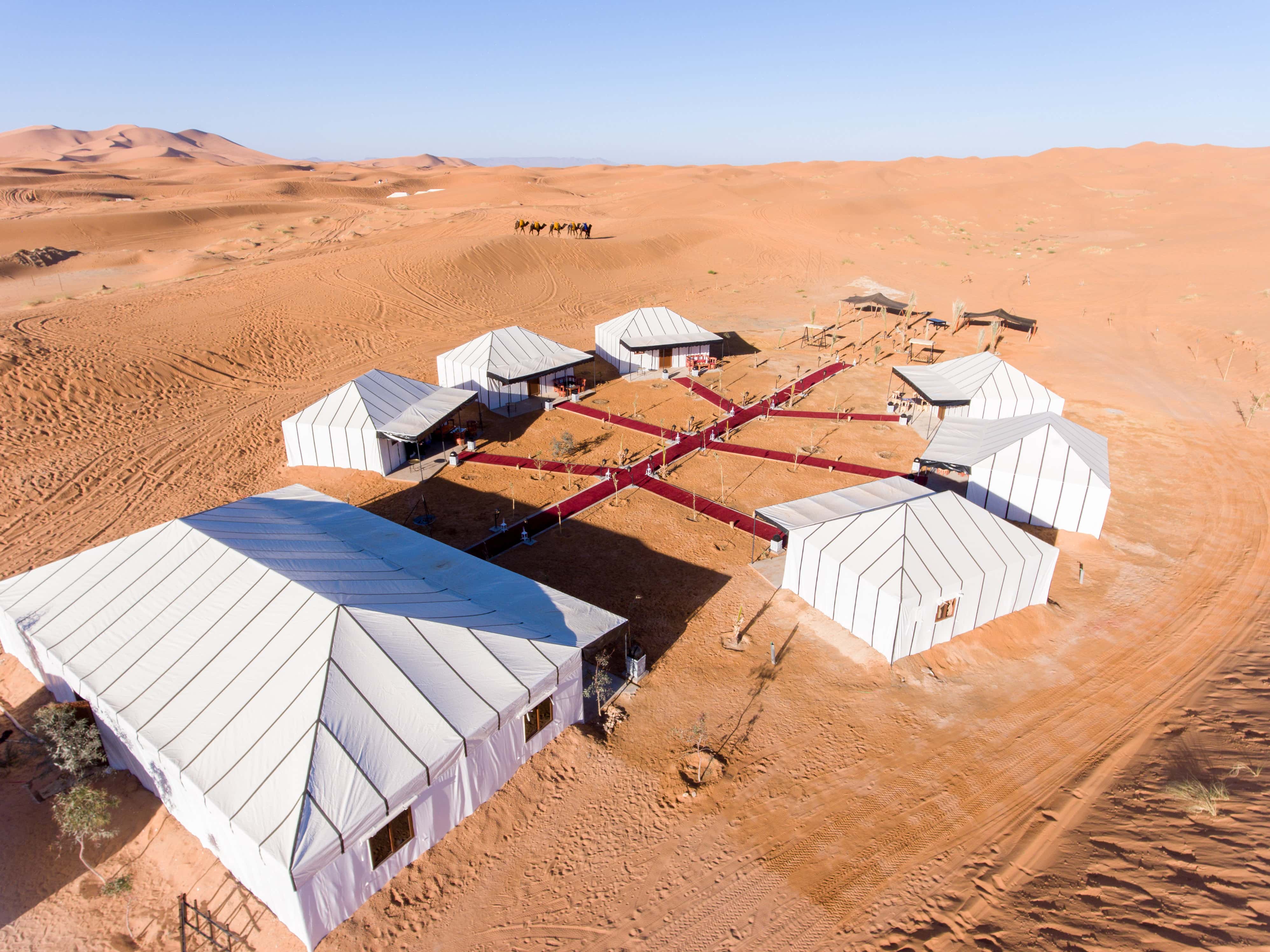
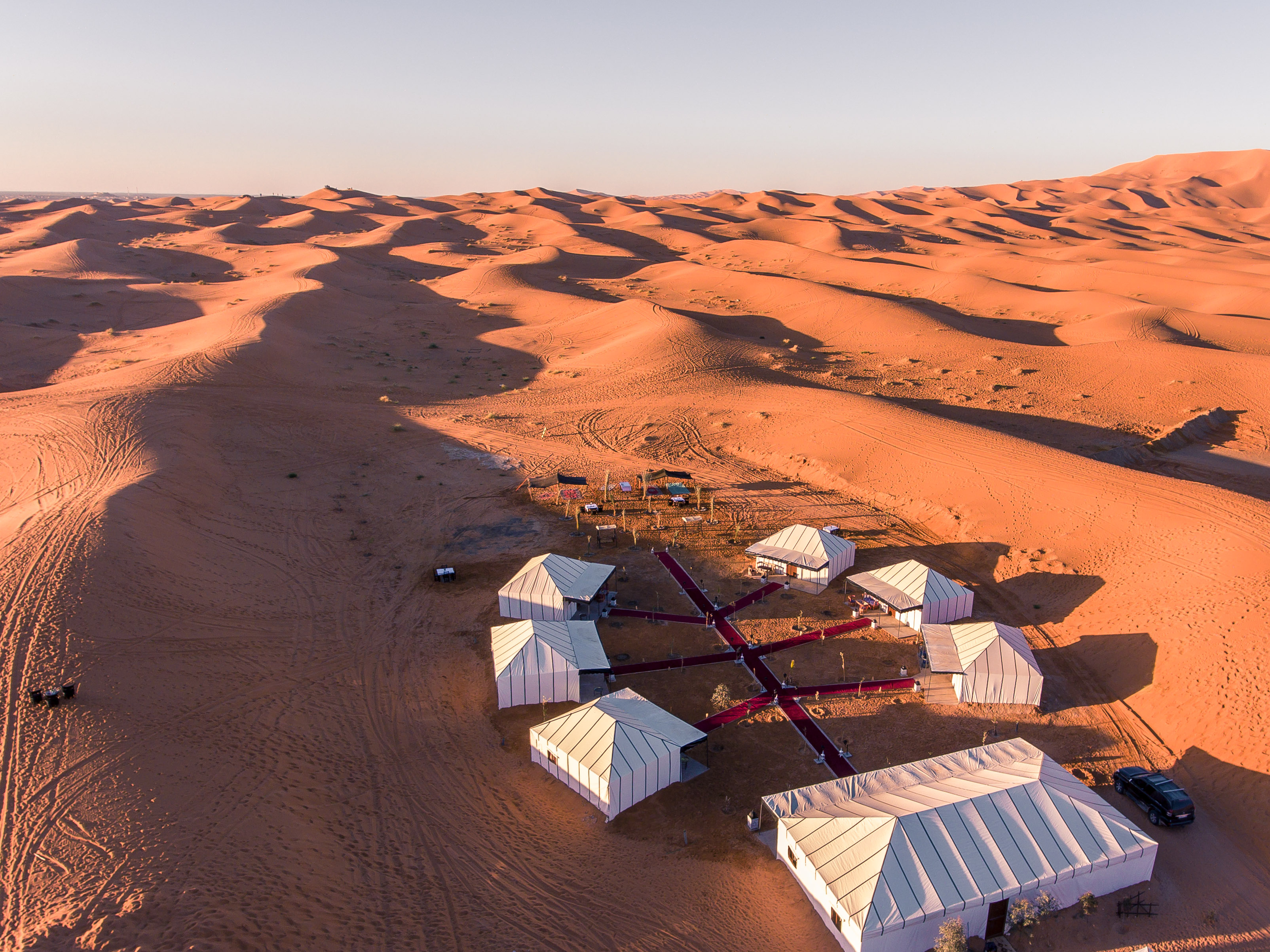
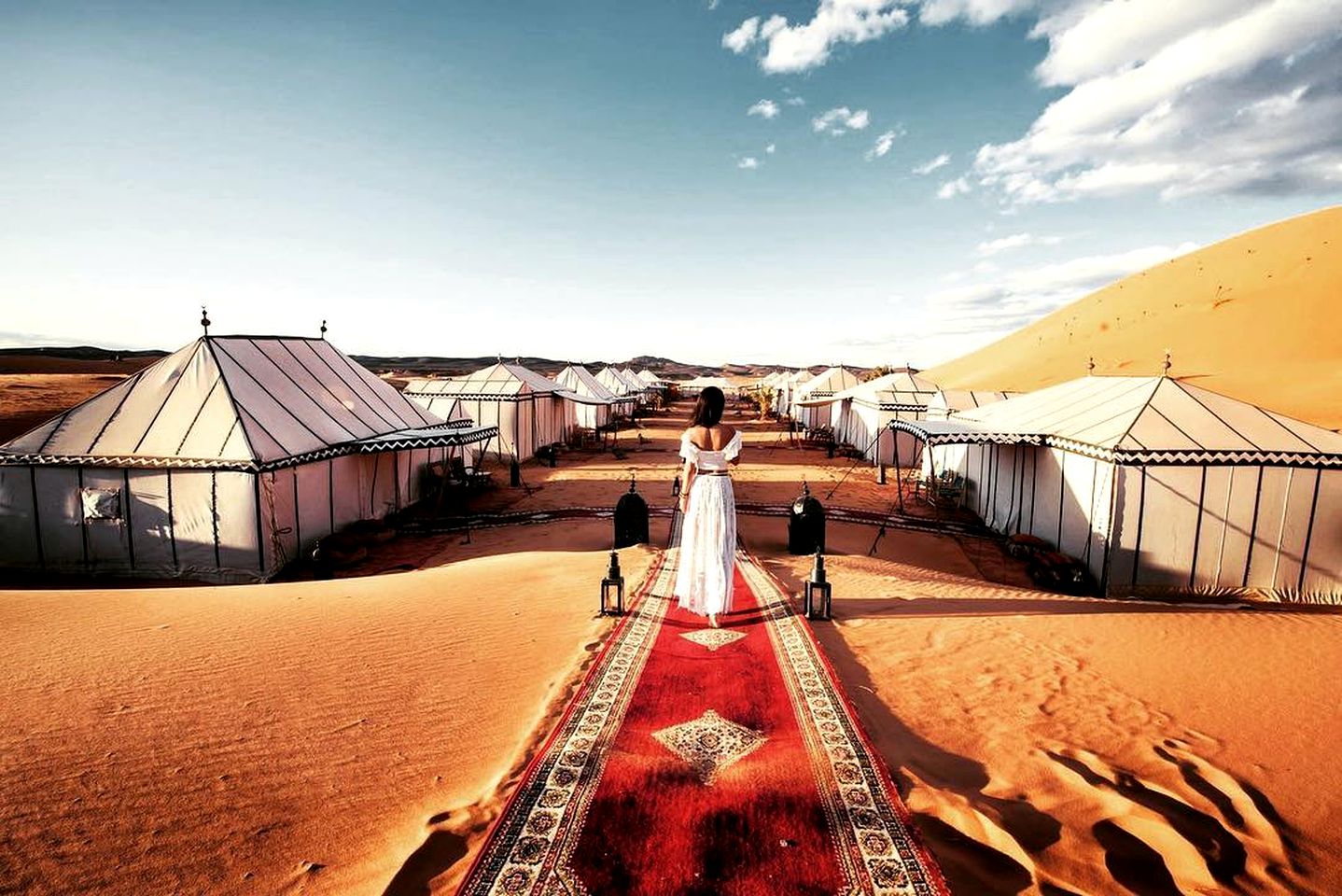
5-star glamping tents within the dune field with private bathrooms, heated floors, and camel-trek packages included.
10 spacious tents inside the dune interior with restaurant, multilingual staff, and stargazing terrace.
Five khaïma-style tents combining Berber design with en-suite facilities and Milky Way views.
Numerous family-run guesthouses and riads line the Merzouga–Hassi Labied road offering rooms from ~300 MAD/night.
Over 70 hotels and guesthouses in and around Merzouga cater to backpackers with dormitory beds and basic camel-trek packages.
There is no official entrance fee to visit erg chebbi; the dune field is open desert accessible to all visitors at no cost (0 MAD). Charges only apply to optional guided tours, camel treks, or overnight camp packages booked through private operators.
The Sahara dunes are open around the clock, every day of the year (00:00–23:59). There is no gate, no closing time, and no ticket barrier — access is unrestricted 365 days a year.
The best arrival window is between 05:30 and 07:30, when sunrise light creates dramatic shadows across the dune ridges and temperatures remain cool. By mid-morning in summer, sand surfaces can reach 60 °C, making extended walking uncomfortable.
October through April is the optimal window for a Merzouga erg chebbi tour: daytime temperatures are 20–30 °C, nights are cool and clear, and camel treks are enjoyable throughout the day. Summer (June–September) is the off-peak season due to intense heat exceeding 40 °C; early-morning or late-evening visits are essential during those months.
The most direct option is the Supratours bus from Marrakech, departing around 08:00 and arriving in Merzouga around 20:00 (approximately 11–12 hours). By car, the drive follows the N9 via Ouarzazate and takes 9–10 hours; a private grand taxi from Rissani to Merzouga adds about 30 minutes to bus journeys originating in Fes.
The open dune field requires no guide for a short walk from the Merzouga village edge, but a licensed Berber guide is strongly recommended for anyone venturing more than 2 km into the erg chebbi interior, as disorientation and heat exhaustion are real risks in featureless terrain.
Wear loose, lightweight, breathable clothing and a wide-brim hat or headscarf for daytime Sahara desert exploration. In the early morning, temperatures can be close to 10 °C even in spring, so bring a warm layer. Closed-toe shoes are advisable to protect feet from scorching sand and hidden rocks.
The soft sand of the erg chebbi dune faces is inaccessible to standard wheelchairs, but visitors with limited mobility can reach the dune base by 4×4 vehicle and experience panoramic dune views from the flat hardpan fringe without walking on sand. Some operators offer seated camel litters as an alternative.
Yes — camel treks at the Merzouga dune field are designed for mixed-ability groups and are generally suitable for children aged 5 and above. Operators offer short one-hour circuits on gentle terrain, and most desert camps provide family tents and child-friendly meals.
Photography is freely permitted throughout erg chebbi's open landscape; there are no photography fees or restricted zones. Always ask permission before photographing local guides, nomadic families, or village residents, in keeping with Moroccan cultural etiquette.
The main activities around the Merzouga dune field include sunrise and sunset camel treks, sandboarding on the dune slipfaces, 4×4 desert excursions to fossil sites and Dayet Srji lake, quad biking, overnight Sahara desert camping, and Gnawa music evenings in Khamlia village.
The closest cultural site is Khamlia village (7 km south), famous for its Gnawa spiritual music performances. Dayet Srji seasonal salt lake draws flamingos and migratory birds in winter and spring. The historic market town of Rissani, about 40 km northwest, holds one of Morocco's largest weekly souks on Mondays, Thursdays, and Sundays.